


The Women of Inogai
The Women of Inogai
Couldn't load pickup availability
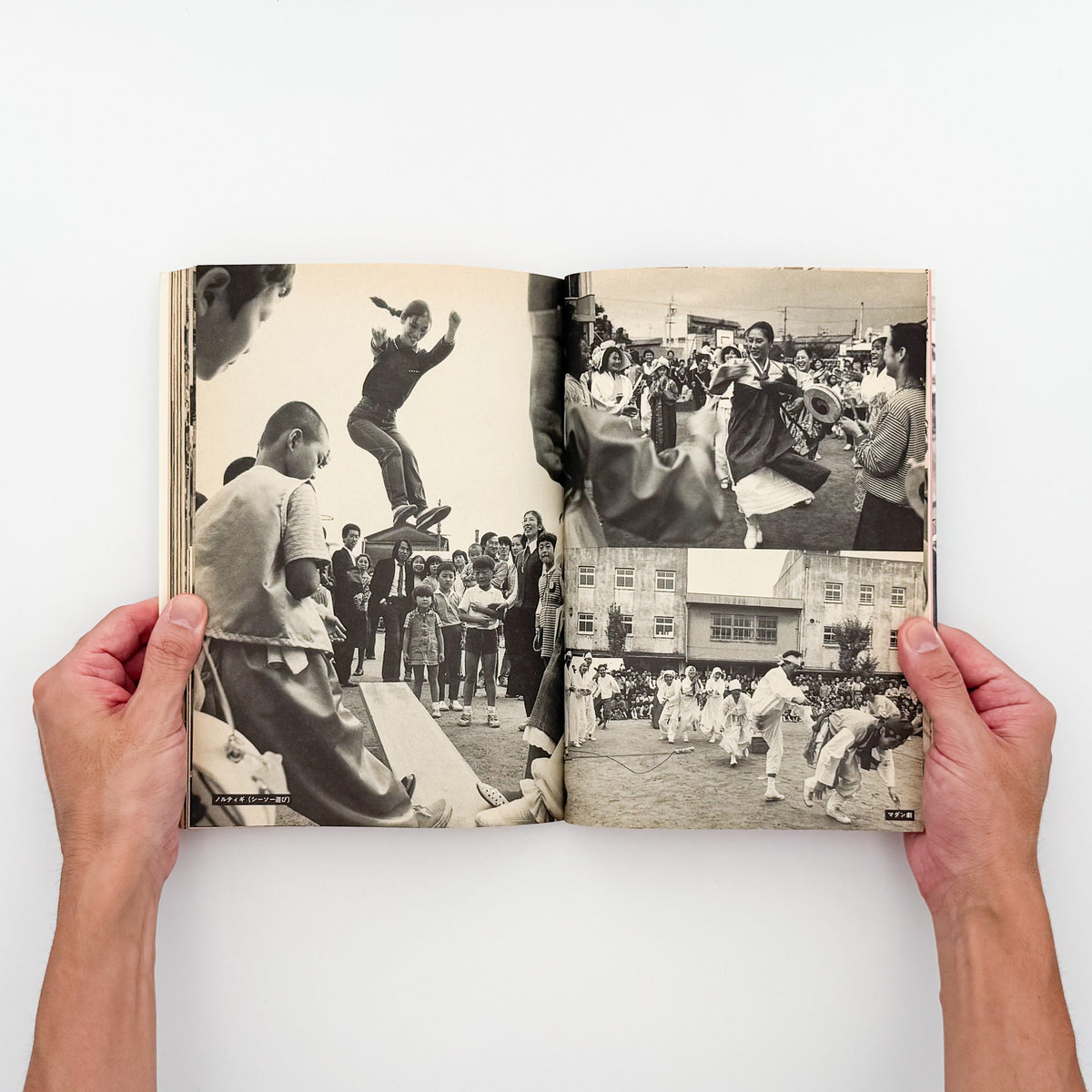
The photo documentary “Women of Ikaiano” by photographer Junichi Ota. Published by Shobunsha in 1987, this book documents the daily lives of Korean and Chinese residents in Ikaiano, Ikuno-ku, Osaka, through photographs and interviews conducted over approximately three years, and includes testimonies from 15 women.
Ikaiano is an area of Osaka where many Korean and Chinese residents have lived. It has fostered a distinctive local culture, with small factories producing sandals and applying metal coatings, kimchi and pig trotters sold in the market, and the sounds of Korean spoken by passersby. Although the name “Ikaiano” disappeared as an official place name following the 1973 residential address system reform, it continues to be used by the people who live there.
The book documents people gathered at the Ikuno Ethnic Culture Festival, children studying in ethnic language classes, and women supporting their families and livelihoods. It captures the local culture and daily activities passed down through generations, including the “Omoni School,” where first-generation Korean women learn to read and write Japanese.
In the interviews, 15 women speak about their upbringing, families, work, experiences of discrimination, and ethnic identities. Rather than viewing Korean and Chinese residents in Japan solely through the lens of social issues, Ota sought to observe the lives of each individual living there.
Through photographs and the words of those involved, this work documents the local culture of 1980s Ikaiano and the experiences of the women who lived there. The back of the book includes Ota’s field notes, “My Ikaiano Notes.”
[Title] Women of Ikaiano — Photo Documentary
[Publisher] Shobunsha
[Publication Date] October 25, 1987
[Page Count] 136 pages
[Size] Approx. 185 × 258 × 12 mm / 390 g
[Format] Softcover
[Language] Japanese
[Title Reading] Onnatachi no Ikaiano
[Author/Editor] Junichi Ota, author; Koga Hirano, book design
[Printing/Binding] Sannichi Printing; Maki Binding
[ISBN] 4794970196
[Condition] Used [5] Fair (slight overall yellowing)
[Accessories] Obi strip
[Featured in] -
[Related Exhibitions] -
Junichi Ota (Oota Junichi) 1950–
Born in Nara Prefecture in 1950. Photographer. After dropping out of the Faculty of Political Science and Economics at Waseda University, he graduated from the Osaka College of Photography. Between 1980 and 1984, he published the photography journal On the Scene with friends.
As a freelance photographer, he published photo essays and photo criticism primarily in magazines and newspapers. He conducted long-term coverage of people marginalized by society and communities rooted in their local areas.
In 1987, he published Women of Ikaiano, documenting Korean and Chinese women living in Ikaiano, Ikuno-ku, Osaka. He has continued to document people from Okinawa living in Osaka, residents of leprosy sanatoriums, and changes in local communities through photographs and text.
His major works and photo books include Women of Ikaiano (1987), Satodai no Kotō (1989), Osaka Uchinanchu (1996), Leprosy Sanatorium: A Century-Long Home (2002), Hanagoe no Hana (2003), My Father’s Diary (2010), and The House Left Behind — Family Memories —.
He has received recognition in the field of documentary photography, including the Japan Photography Association Award for Authorship for Hanagoe no Hana and the Nobuo Inai Award for My Father’s Diary.
< Related Figures >
Junichi Ota
Koga Hirano
Kaitaro Tsuno
Kei Kamada
Masaharu Goto
Shobunsha


You may also like
-
You're on that side, I'm on this side (signed)
Vendor:梁丞佑 / YANG Seung-WooRegular price ¥3,850Regular price -
A mountain village and its farmers
Vendor:南良和 / MINAMI YoshikazuRegular price ¥2,000Regular price -
Japan's "Northernmost Family": Memories of Winter on Rebun Island (signed)
Vendor:関口真路 / SEKIGUCHI MasamichiRegular price ¥1,700Regular price -

 Sold out
Nippon is expensive!
Vendor:吉永マサユキ / YOSHINAGA MasayukiRegular price ¥3,000Regular price -
More: Records of a Graduate of a Part-Time Girls' High School
Vendor:丸橋学 / MARUBASHI ManabuRegular price ¥15,400Regular price -
The Life of Imokko Yocchan (Photo Musée)
Vendor:影山光洋 / KAGEYAMA KoyoRegular price ¥3,800Regular price


